

Targeted Protein Degradation in Clinical Trials: The Promise of PROTACs and Molecular Glues

Targeted protein degradation (TPD) has emerged as a promising therapeutic approach, with several drugs currently in clinical trials. Proteolysis-targeting chimeras (PROTACs) and molecular glues are the two main classes of TPD drugs. As of 2025, there are multiple PROTAC candidates in clinical trials, including vepdegestrant (ARV-471) for breast cancer, which has advanced to Phase III (1,2). Other notable PROTACs in clinical development include ARV-110 for prostate cancer, KT-253 targeting MDM2, and DT2216 for hematologic and solid tumors (3-5). Molecular glues, such as CC-220 (iberdomide) and CC-90009 (eragidomide), are being evaluated for multiple myeloma, systemic lupus erythematosus, and acute myeloid leukemia (4-5). These TPD drugs offer potential advantages over traditional small molecule inhibitors, including the ability to target previously “undruggable” proteins and potentially overcome drug resistance(4,6). While the field is still evolving, early clinical data suggest that TPD drugs have promising safety profiles and demonstrate dose-dependent target engagement (7,8).
Aspirin’s Potential Impact on PROTAC and Molecular Glue Drugs’ Efficacy
Recent research (16,17) has demonstrated that aspirin inhibits proteasomal degradation, primarily in the context of α-synuclein clearance. The study revealed that aspirin acetylates proteasomal subunits (PSMB5, PSMB6, and PSMB7), leading to a 48–63% reduction in proteasomal activity. Instead of directing proteins to the ubiquitin-proteasome system (UPS) via K48-linked ubiquitination, aspirin shifts degradation toward lysosomal pathways through K63-linked ubiquitination. However, it is important to note that this study did not directly investigate aspirin’s effects on PROTACs or molecular glue drugs. Instead, it focused on α-synuclein degradation, leaving open questions about how aspirin might affect other proteasome-dependent pathways, including targeted protein degradation (TPD) strategies like PROTACs and molecular glues.
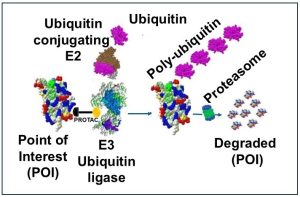
PROTACs (Proteolysis-Targeting Chimeras) and molecular glues are innovative TPD approaches designed to eliminate disease-causing proteins via the UPS. PROTACs function by simultaneously binding a target protein and an E3 ubiquitin ligase, facilitating K48-linked ubiquitination and directing the protein to the proteasome for degradation. In contrast, molecular glues stabilize interactions between E3 ligases and target proteins, promoting their ubiquitination and subsequent proteasomal degradation. Since both PROTACs and molecular glues require a functional proteasome, any inhibition of proteasomal activity, such as that observed with aspirin, could hypothetically impact their efficacy.Although the current study does not explicitly examine PROTAC or molecular glue interactions, it raises important considerations regarding their potential interplay with aspirin-induced proteasomal inhibition. If aspirin were to reduce proteasomal activity in a broader context beyond α-synuclein, it could lead to inefficient degradation of PROTAC-recruited target proteins. While PROTACs may still successfully recruit E3 ligases and form ternary complexes, the inhibited proteasome might fail to degrade the ubiquitinated targets, potentially resulting in protein accumulation rather than clearance. This could, in theory, lead to resistance to PROTAC-based therapies, necessitating dose adjustments or alternative degradation strategies in affected patients.
Similarly, molecular glue drugs may also be impacted if proteasomal function is impaired by aspirin. These drugs rely on proteasome-mediated degradation of target proteins, meaning that if proteasomal inhibition occurs, the ubiquitinated proteins may persist instead of being degraded, potentially causing off-target effects or reduced therapeutic efficacy. Patients taking aspirin alongside molecular glue therapies could therefore experience diminished drug response, highlighting the need for further investigation into potential aspirin-TPD interactions.
Key Differences Between K48-and K63-Linked Ubiquitination
K48- and K63-linked ubiquitination are two major types of ubiquitin modifications that play distinct roles in cellular processes. K48-linked ubiquitination primarily signals for proteasomal degradation. Polyubiquitin chains linked via lysine 48 target proteins for recognition by the 26S proteasome, facilitating their degradation and recycling. This pathway is essential for maintaining protein homeostasis and regulating cellular processes like the cell cycle and stress responses (18).
K63-linked ubiquitin chains serve as a signal to direct proteins to the endosomal-lysosomal pathway rather than proteasomal degradation3 This targeting is mediated by the ESCRT0 (Endosomal Sorting Complex Required for Transport) complex and its components, STAM and Hrs, which selectively bind to K63-linked chains. K63-linked ubiquitination promotes the formation and autophagic clearance of protein inclusions associated with neurodegenerative diseases (19). This suggests a role in targeting aggregated proteins for lysosomal degradation via autophagy. K63-linked polyubiquitin chains are necessary for the rapid lysosomal degradation of activated receptors, such as the EGF receptor (EGFR)2. This modification is crucial for efficient sorting and targeting of signaling receptors to lysosomes, allowing for their physiological down-regulation upon activation (20).The following Table (Table 1) summarizes the differences between K48- and K63-linked ubiquitination.
Table 1: Comparison between K63- and K48-linked ubiquitination
| Feature | K63-Linked Ubiquitination | K48-Linked Ubiquitination |
|---|---|---|
| Primary Function | Signal for lysosomal degradation, protein trafficking, and signaling | Signal for proteasomal degradation |
| Degradation Pathway | Lysosomal degradation (via endosomal pathway and autophagy) | Proteasomal degradation (26S proteasome) |
| ESCRT Involvement | Moderate (can function independently via direct lysosomal targeting) | Minimal (primarily proteasomal) |
| Ubiquitin Chain Structure | Open, linear, extended chains | Compact, branched chains |
| Associated Processes | Endosomal sorting, receptor trafficking, autophagy, DNA damage response | Proteasomal degradation, cell cycle control, apoptosis |
| Role in α-Synuclein Degradation | Directs α-syn aggregates to lysosomes for degradation | Minimal role (α-syn aggregates are usually proteasome-resistant) |
| Therapeutic Relevance | Enhanced by aspirin to promote α-syn clearance | Targeted by proteasome inhibitors (e.g., bortezomib) in cancer therapy |
Alternative TPD Strategies Could Overcome Proteasome Inhibition
Given that aspirin appears to shift protein degradation toward lysosomal pathways, alternative TPD strategies that utilize lysosomal degradation rather than proteasomal pathways may provide a viable solution for aspirin users. Emerging degradation technologies such as LyTACs (Lysosome-Targeting Chimeras) and ATACs (Autophagy-Targeting Chimeras), which leverage lysosomal or autophagic degradation instead of the proteasome, might be better suited for patients who regularly take aspirin. LyTACs function by recruiting lysosomal-targeting receptors (e.g., CI-M6PR) to degrade extracellular and membrane proteins (9), while ATACs leverage autophagy to degrade intracellular proteins (10). Given that aspirin promotes K63-linked ubiquitination and lysosomal degradation (16,17), it is possible that aspirin could enhance the efficacy of LyTACs or ATACs in specific biological contexts.These degradation strategies may be particularly useful in diseases where lysosomal degradation is already upregulated, such as neurodegenerative disorders characterized by protein aggregation, including Parkinson’s disease and Alzheimer’s disease (8,11).
While LyTACs and ATACs represent promising next-generation TPD approaches, their development and clinical application remain in early stages (12). Key considerations such as drug specificity, safety, and efficacy need thorough evaluation before they can be widely adopted in clinical settings. Furthermore, the interplay between aspirin and these alternative degradation pathways requires further investigation, as aspirin could either synergize with or antagonize their effects (8). Future research will be essential to determine the feasibility of integrating aspirin with LyTAC or ATAC-based therapies in targeted protein degradation strategies.
Consideration: K-Linked Ubiquitination Types Other Than K48- and K63-Linked Ubiquitination
In addition to K48- and K63-linked ubiquitination, which are the most well-characterized modifications involved in proteasomal and lysosomal degradation, other K-linked ubiquitination types play crucial roles in protein homeostasis and degradation pathways. Table 2 outlines various K-linked ubiquitination types, excluding K48 and K63, and their potential impact on PROTACs or molecular glue drugs. The interactions of these ubiquitination pathways with therapeutic agents remain largely unexplored and require further investigation to optimize targeted protein degradation (TPD) strategies for therapeutic applications.
Table 2: K-linked ubiquitination types other than K48- and K63-linked ubiquitination (21).
| Ubiquitination Type | Degradation Pathway | Function |
|---|---|---|
| K6-Linked (21) | Mitochondrial degradation (mitophagy) | Regulates mitochondrial clearance via PINK1/Parkin pathway. |
| K11-Linked (23) | Proteasomal | Regulates cell cycle proteins, particularly during mitosis; recognized by APC/C (Anaphase-Promoting Complex). |
| K27-Linked (22) | Lysosomal (ESCRT-mediated degradation) | Involved in endosomal sorting and protein clearance, particularly in neurodegenerative diseases. |
| K29-Linked (22) | Lysosomal protein degradation | Regulates lysosomal protein turnover and quality control. |
| K33-Linked (21, 22, 25) | Vesicular transport, possible role in autophagy | May regulate autophagy receptor trafficking. |
In addition to homotypic ubiquitin chains, cells also utilize heterotypic or branched ubiquitin chains, which incorporate different linkage types to create complex signaling cues (24). Examples of such branched chains include K11/K48, K29/K48, and K48/K63 combinations, as well as M1/K63 heterotypic chains. These diverse ubiquitination patterns influence a wide range of cellular functions, including targeted protein degradation, modifications in protein-protein interactions, alterations in protein localization, and the regulation of key signaling pathways. The structural complexity of these chains allows cells to fine-tune responses to various stimuli, ensuring precise control over protein fate and function.
Potential Impact on Proteasome Inhibitors in PROTAC and Molecular Glue Drugs
Several proteasome inhibitors, including carfilzomib, bortezomib, and ixazomib, are in clinical use, mainly for multiple myeloma (13-15). These drugs block the 20S proteasome, preventing degradation of ubiquitinated proteins. PROTACs and molecular glue drugs also rely on proteasomal degradation, raising concerns about interactions with aspirin, which inhibits proteasome function by acetylating PSMB5, PSMB6, and PSMB7, reducing its activity by 48–63%.
The key question is whether aspirin weakens or alters proteasome inhibitor efficacy. The study confirms aspirin-induced proteasomal inhibition but does not examine its impact on proteasome inhibitors. If aspirin shifts protein degradation to lysosomal pathways, it may interfere with or enhance these drugs’ effects. Further research is needed to determine whether aspirin modifies proteasome inhibitor efficacy in clinical settings. Understanding these interactions is crucial for optimizing treatment strategies and avoiding potential drug resistance or reduced efficacy.
Personalized PROTAC/Molecular Glue Therapy: Future Directions and Clinical Considerations
Aspirin’s inhibition of proteasomal activity suggests that a personalized approach to targeted protein degradation (TPD) therapy may be necessary. To optimize treatment outcomes, patients could undergo pre-treatment screening to assess proteasome activity, ensuring that only those with functional proteasomes receive PROTAC or molecular glue therapies. Additionally, biomarker-based companion diagnostics could help predict patient response to these drugs, improving treatment selection.
To fully assess aspirin’s impact on TPD therapies, clinical trials should stratify patients based on aspirin use, ensuring that aspirin users are evaluated separately for drug efficacy. Additionally, combination therapy approaches should be explored, such as co-administering PROTACs with proteasome activators to counteract aspirin’s inhibitory effects. Further research is also needed to determine whether aspirin-induced proteasomal inhibition is reversible and how it might be managed in clinical settings. Understanding these interactions will be crucial for developing effective and personalized PROTAC/molecular glue therapies that maximize patient benefit.
Related Essay
When a Wonder Drug Gets a Second Life: How Aspirin Could Help Treat Parkinson’s Disease
Do you need to develop a custom in vitro or cell-based GMP/GLP-compliant or non-GMP/GLP potency assays for TPDs like PROTACs and Molecular Glues? With a proven track record of over 30 years creating innovative potency assays for a wide range of therapeutics, we are here to provide you with stellar service for your cell bioassay needs. Please call us at 415.883.8000 or email us at info@marinbio.com.
Click here to learn more about Targeted Protein Degradation Services →
References
- PROTAC Targeted Protein Degraders Clinical Trials Insight
- Arvinas Updates Guidance for First- and Second-Line Phase 3 Combination Trials with Vepdegestrant, Highlights Upcoming Milestones, and Provides Corporate Update.
- Summary of PROTAC Degraders in Clinical Trials.
- Induced protein degradation for therapeutics: past, present, and future.
- Targeted protein degradation: advances in drug discovery and clinical practice.
- Recent Advances in PROTACs for Drug Targeted Protein Research.
- C4 Therapeutics Announces 2025 Milestones Across Clinical Portfolio of Degrader Medicines Pursuing Targets of High Unmet Need in Oncology.
- Arvinas Presents a Platform Update, Including Initial Data from the First Two Clinical Trials of PROTAC® Targeted Protein Degraders.
- Lysosome-targeting chimaeras for degradation of extracellular proteins
- Targeted protein degradation via the autophagy-lysosome system: AUTOTAC (AUTOphagy-TArgeting Chimera).
- Aspirin Induces Lysosomal Biogenesis and Attenuates Amyloid Plaque Pathology in a Mouse Model of Alzheimer’s Disease via PPARα.
- Targeted protein degradation directly engaging lysosomes or proteasomes.
- Carfilzomib: a novel treatment in relapsed and refractory multiple myeloma.
- Bortezomib-mediated 26S proteasome inhibition causes cell-cycle arrest and induces apoptosis in CD-30+ anaplastic large cell lymphoma.
- Ninlaro (Ixazomib): First Oral Proteasome Inhibitor Approved for the Treatment of Patients with Relapsed or Refractory Multiple Myeloma.
- Aspirin inhibits proteasomal degradation and promotes α-synuclein aggregate clearance through K63 ubiquitination.
- When a Wonder Drug Gets a Second Life: How Aspirin Could Help Treat Parkinson’s Disease
- Why do cellular proteins linked to K63‐polyubiquitin chains not associate with proteasomes?
- Lysine 63-linked ubiquitination promotes the formation and autophagic clearance of protein inclusions associated with neurodegenerative diseases.
- Lysine 63-linked polyubiquitination is required for EGF receptor degradation.
- E3 ubiquitin ligases: styles, structures and functions.
- K29-Linked Ubiquitin Signaling Regulates Proteotoxic Stress Response and Cell Cycle.
- K11-linked polyubiquitination in cell cycle control revealed by a K11 linkage-specific antibody
- Emerging functions of branched ubiquitin chains.
- Crosstalk Between Mammalian Autophagy and the Ubiquitin-Proteasome System
Disclaimer: This information is intended solely for research purposes and does not serve as medical advice.
About Marin Biologic Laboratories (MarinBio)
Our Recent Publication/Meeting Presentation
American Society of Hematology (ASH) Annual Meeting 2024.
Comprehensive Assay Solutions for In Vitro and Cell Based Potency Assays and Pharmacokinetics Studies- Our Expertise
With 30 years of expertise in cell culture, cell-based assays, and preclinical/clinical PK/PD analysis, we specialize in offering assay services essential for a wide variety of therapeutic drug development programs, preclinical studies, IND/BLA applications, and commercialization. Our comprehensive services include both preclinical non-GLP and GLP assays, as well as non-GMP and GMP assays, providing critical support throughout the entire development pipeline.
Watch the following video and explore our latest presentation on the development and validation of potency and pharmacokinetic (PK) assays for AAV vectors, highlighting innovative methodologies and industry-leading expertise.
Download the full presentation: Development of Custom Cell Based and In vitro Potency and Pharmacokinetics (PK) Assays for AAV vectors- Marin biologic Laboratories
Development of Cell-Based Potency Assays: Case Studies and Blogs from Marin Biologic Laboratories (MarinBio)




Our PROTAC/TPD Related Articles/Blogs
Targeted Protein Degradation (TDP) Assay Services Offered by MarinBio
Target Engagement Assays
These assays measure the binding affinity of the degrader to the target protein and the E3 ligase.
- Fluorescence Polarization (FP) Assays: Used to determine the binding affinity of the degrader to the target protein or E3 ligase by measuring changes in fluorescence polarization.
- Flow Cytometry: Used to measure binding affinity of degraders to target proteins or E3 ligases in live cells.
Mechanism of Action (MOA) Assays
MOA assays provide a comprehensive understanding of the TPD mechanism, from initial target engagement to final protein degradation, helping researchers optimize and characterize TPD compounds throughout the drug discovery process.
- Ternary Complex Formation Assays: Co-immunoprecipitation (Co-IP).
- Ubiquitination Assays: In vitro ubiquitination assays and Western blotting for ubiquitinated proteins.
- Cellular Degradation Assays: ELISA, Western blot, qPCR
- Functional Cellular Assays: Cell viability assays, Reporter gene assays
- Cell-Free Degradation Assays: In vitro ubiquitination Assays
- Flow Cytometry: Real-time monitoring of protein degradation kinetics in live cells, measuring ubiquitination of target proteins.
Selectivity Assays
- Off-Target Screening: Identify and quantify potential off-target effects of the degrader.
- Cytokine Release Assays: Measures the release of cytokines to assess the immunomodulatory effects of the degrader.
Potency Assays
A potency assay measures the effectiveness of a degrader molecule in degrading a target protein. These assays determine the minimum compound amount needed for a biological response, crucial for drug discovery and development. The following assays can be used:
ADME/Tox Studies
ADME/Tox assays provide crucial data for predicting the pharmacokinetic and pharmacodynamic properties and evaluating the safety profile of TPD compounds. See our ADME/Tox service page for more details.
GMP/GLP Services
- Potency Assays
- Stability Testing
- Lot Release Testing
- Serum/plasma-based pharmacokinetic (PK), pharmacodynamic (PD), and toxicology studies.
