

Introduction
Artificial intelligence (AI) has rapidly transformed the field of protein engineering by enabling the generation of novel protein sequences and structures at a scale and speed previously unattainable. Machine learning and deep learning models now allow scientists to navigate vast areas of sequence space and propose designs with enhanced or entirely new functions. Despite these advances, translating AI-designed proteins into functional biological entities remains dependent on robust experimental validation, particularly cell-based assays, which measure protein activity in physiologically relevant systems. This review examines several interrelated themes: (1) the definition and scope of AI-based protein engineering; (2) the extent to which cell-based assays represent a bottleneck in validating AI-engineered proteins; (3) how information about a specific target can guide the choice of cellular assays; (4) how approaches analogous to medicinal chemistry may be required to refine AI-generated proteins; and (5) emerging strategies that integrate AI design and cell-based functional testing in closed-loop workflows. We conclude that while cell-based assays do impose throughput and data-feedback constraints, careful assay design guided by mechanism, quantitative readouts, and iterative learning will accelerate the emergence of a new discipline linking computational design with biological function.What is AI-Based Protein Engineering
AI-based protein engineering applies machine learning (ML) and deep learning (DL) algorithms to design, optimize, or repurpose protein sequences for specified structural, functional, or developability outcomes. Recent advances, including generative language models and diffusion models trained on extensive protein sequence-structure databases, have revolutionized the exploration of sequence space. These models propose sequences with desirable characteristics such as improved stability, affinity, or catalytic efficiency, while predictive models estimate biophysical and biochemical properties to prioritize candidates. The modern design-build-test-learn cycle is increasingly AI-driven. The cycle is as follows: 1. computational design by model 2. experimental construction of variant libraries 3. testing in biochemical or cellular assays 4. learning via model retraining. Structure prediction tools such as AlphaFold and ESMFold infer plausible folds from sequences, enabling in silico pre-screening of design feasibility. Generative models create novel proteins that may deviate substantially from natural homologs, while predictive algorithms score variants for solubility, expression, immunogenicity, or binding. These predictions guide the experimental selection of promising candidates for testing. Although this paradigm shifts protein engineering from rational design or random mutagenesis toward data-driven exploration, functional activity remains experimentally dependent. AI models may propose millions of sequences, but it is cell-based assays, capturing complex processes such as folding, trafficking, signaling, and degradation, that ultimately determine whether these designs perform as intended in a biological environment.Cell-Based Assays are a Bottleneck for Testing AI-Based Protein Engineering Function
Cell-based assays are currently one of the major bottlenecks in validating AI-driven protein designs. The primary challenge arises from the throughput gap between computational prediction and experimental validation. Modern AI models such as AlphaFold, RFdiffusion, ProteinMPNN, and ESMFold can generate or optimize millions of protein variants in silico, whereas cellular assays typically operate at low-to-medium throughput due to limitations in transfection efficiency, expression, and automation capacity. Consequently, only a small fraction of predicted proteins can be experimentally evaluated. Biological complexity further compounds the issue. Cellular assays introduce context-dependent effects, differences in folding, post-translational modification, or trafficking that are not captured by computational models. Even identical proteins may behave differently across cell lines, complicating reproducibility and interpretation. Scaling also presents challenges: variability in culture conditions, passage number, and assay sensitivity can generate inconsistent results, particularly in partially automated settings. Cost and infrastructure remain significant barriers. Large-scale cell-based assays require robotics, automated microscopy, and sophisticated data management systems, whereas AI-based prediction is computationally inexpensive once established. Moreover, AI models require extensive, labeled experimental datasets for retraining and refinement, yet current cell-based validation throughput limits data generation and slows feedback loops.Guiding the Selection of Cell-Based Assays for Testing AI-Engineered Protein Function
When AI models generate new protein variants, whether enzymes, antibodies, cytokines, or receptors, the selection of appropriate cell-based assays must effectively connect computational predictions with biological outcomes. This process relies on mechanistic insight, data mining, and contextual modeling. The first step involves mapping the intended biological effect and mechanism of action (MOA). Researchers integrate data from resources such as UniProt, GeneCards, Reactome, BRENDA, and KEGG to understand pathway associations, native activity, and subcellular localization. Structural biology databases like the Protein Data Bank (PDB) and AlphaFold DB provide information on key residues, binding sites, and domains that inform assay design. The goal is to identify a measurable cellular phenotype, such as signaling, secretion, or cytotoxicity, that reflects the protein’s activity. Table 1. Matching Assay Type to Function| Protein Type | Typical Cell-Based Assays | Functional Readouts |
| Ligands / Cytokines / Growth Factors | Reporter gene assays, phospho-signaling (pSTAT, pERK), proliferation assays | Signal activation, receptor engagement |
| Receptors / GPCRs | Second messenger assays (cAMP, Ca²⁺ flux), β-arrestin recruitment | Downstream signaling, ligand bias |
| Enzymes | Substrate conversion in cells, product quantification, fluorescent reporters | Catalytic activity, pathway modulation |
| Antibodies / Binding Proteins | Target cell killing (ADCC, CDC), receptor blockade, internalization | Functional efficacy, target engagement |
| Transcription Factors | Reporter assays (luciferase, GFP), RNA-seq profiling | Transcriptional activity |
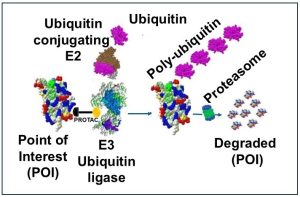
| Protein Degraders (PROTAC-like) | Target degradation assays, Western blot, flow cytometry | Proteolytic efficiency |
- Researchers frequently consult structured databases such as the BioAssay Ontology (BAO), ChEMBL, and PubChem BioAssay to identify validated assay formats. Cell repositories like Addgene, ATCC, and Cellosaurus assist in selecting cell lines expressing relevant targets.
- AI-designed proteins should be tested in cell types that approximate the physiological environment, whether through endogenous expression models, engineered reporter lines, or primary cells and organoids. Assay selection depends on the required post-translational modifications, receptor density, and species origin.
- Single-cell transcriptomics and proteomics data can reveal which cell types express or respond to the target, while pathway inference tools such as Ingenuity Pathway Analysis or OmicNavigator help connect molecular effects to measurable phenotypes.
- AI model output
- Target structure/function prediction
- Literature and database mining
- Mechanistic mapping
- Assay ontology search
- Cell line selection
- Pilot validation
A Medicinal Chemistry Analogy: Toward “Protein Medicinal Engineering”
An approach analogous to medicinal chemistry will be essential for refining AI-driven protein designs. Just as small-molecule optimization depends on iterative structure–activity relationship (SAR) cycles, AI-generated proteins require cycles of design, expression, testing, learning, and redesign to improve performance. AI tools such as RFdiffusion, ProteinMPNN, and Chroma can generate structurally plausible proteins, but these are often starting points rather than final therapeutic candidates. Optimization is needed to enhance binding affinity, catalytic activity, stability, solubility, and pharmacokinetic properties. This emerging discipline, termed “Protein Medicinal Engineering”, combines sequence-function mapping, deep learning-based latent representations, and empirical assay data to guide multi-objective optimization of protein designs. While AI models accelerate exploration, empirical feedback remains indispensable for correcting biases and validating predictions. Table 2. From SAR to SeqAR| Medicinal Chemistry Concept | Protein Engineering Analogue |
| Structure–Activity Relationship (SAR) | Sequence–Activity Relationship (SeqAR) |
| Chemical substituents | Amino acid substitutions |
| Lipophilicity, polarity, steric effects | Fold stability, surface charge, interface geometry |
| QSAR modeling | Sequence-to-function deep learning models |
| Medicinal chemist intuition | Model-guided design + bioengineer intuition |
Future Approaches for Integrating AI-Based Protein Engineering and Cell-Based Functional Testing
Autonomous Platforms and Closed-Loop Systems- Self-driving laboratory systems that couple AI design with robotic synthesis, automated expression, and high-throughput cellular assays are emerging. These platforms continuously feed assay data back into the AI model, reducing turnaround time and accelerating learning cycles.
- Advances in droplet microfluidics, biosensors, and high-content imaging will enable massive parallel screening of protein variants. Multiplexed readouts and reporter circuits will provide multidimensional data per variant, improving model generalization.
- Next-generation assays will capture transcriptomic, proteomic, and morphological changes, providing richer datasets for model training. AI models will increasingly incorporate cell-context predictors, such as trafficking behavior and interaction with native proteomes, to simulate “in-cell” effects.
- Standardization of assay formats, metadata, and ontologies will be essential for reproducibility and transfer learning across laboratories. Sharing standardized datasets linking sequence to function will facilitate benchmarking and accelerate collective progress.
Conclusion
AI-based protein engineering represents a transformative advance in the design and optimization of functional biomolecules. However, its impact depends on accurate measurement of biological function, and cell-based assays remain indispensable for linking computational predictions to real-world outcomes. Although current assays impose throughput and feedback limitations, thoughtful assay selection, quantitative design, and integration with AI-driven iterative learning can mitigate these challenges. By adopting principles analogous to medicinal chemistry and embracing automated, high-content, closed-loop experimentation, the field stands poised to evolve into a new era of protein medicinal engineering, a discipline uniting AI prediction with cellular function to accelerate the creation of next-generation therapeutic and industrial proteins. Table 3. Computational Programs for AI-Based Protein Structure Prediction and Design| Program | Purpose / Function | Output |
| AlphaFold | Developed by DeepMind, AlphaFold predicts the 3D structure of proteins from amino acid sequences using deep learning trained on evolutionary and structural data. It revolutionized protein structure prediction by achieving near-experimental accuracy. | High-confidence 3D protein structures in PDB format, with per-residue confidence scores (pLDDT). |
| ESMFold | Created by Meta AI, ESMFold uses large-scale protein language models (ESM-2) to directly predict 3D protein structures without multiple sequence alignments (MSAs). It offers faster inference compared to AlphaFold. | Predicted protein 3D coordinates and confidence metrics, usually provided in PDB format. |
| RFdiffusion | Developed by the Baker Lab (University of Washington), RFdiffusion is a generative diffusion model for de novo protein design. It builds new protein backbones by iteratively refining random noise toward functional structures. | Novel 3D protein backbone coordinates suitable for downstream sequence design. |
| ProteinMPNN | Also from the Baker Lab, ProteinMPNN designs amino acid sequences that are compatible with a given protein backbone structure, optimizing for stability and foldability. | Amino acid sequences predicted to fold into a supplied protein backbone. |
| Chroma | Developed by Generate Biomedicines, Chroma is a diffusion-based generative model that co-designs both 3D structures and amino acid sequences simultaneously, enabling generation of diverse and functional protein folds. | Jointly generated protein structures and sequences in PDB format, often used for novel protein design. |
| Database | Purpose | Content | Link |
| UniProt | Central resource for protein sequence and functional information | Protein sequences, functional annotations, domain structures, post-translational modifications | https://www.uniprot.org |
| GeneCards | Integrated database of human genes | Gene function, expression, pathways, protein interactions, disorders, and publications | https://www.genecards.org |
| Reactome | Curated pathway database | Biological pathways, reactions, and molecular events in humans and model organisms | https://reactome.org |
| BRENDA | Comprehensive enzyme information system | Enzyme function, classification, kinetics, substrates, inhibitors, and tissue distribution | https://www.brenda-enzymes.org |
| KEGG | Pathway and molecular interaction database | Genes, proteins, metabolites, pathways, diseases, drugs, and systems-level biological networks | https://www.kegg.jp |
| Protein Data Bank (PDB) | Repository of 3D structures of biological macromolecules | 3D atomic coordinates of proteins, nucleic acids, and complexes | https://www.rcsb.org |
| AlphaFold DB | Predicted protein structure database | Computationally predicted 3D structures of proteins using AlphaFold | https://www.alphafold.ebi.ac.uk |
| BioAssay Ontology (BAO) | Standardized ontology for bioassay data | Ontology terms describing assay formats, endpoints, detection methods, and biological targets | https://bioassayontology.org |
| ChEMBL | Bioactive molecule and drug discovery database | Bioactive compounds, drug targets, bioassays, ADMET properties | https://www.ebi.ac.uk/chembl |
| PubChem BioAssay | Bioactivity database of chemical compounds | Assay results for small molecules tested in biological systems | https://pubchem.ncbi.nlm.nih.gov/bioassay |
| Addgene | Plasmid repository | Plasmid vectors for research, including sequences, maps, and distribution to labs | https://www.addgene.org |
| ATCC | Biological material repository | Cell lines, microbes, viruses, and other biological materials | https://www.atcc.org |
| Cellosaurus | Knowledgebase of cell lines | Metadata for cell lines including origin, disease, culture conditions, and cross-references | https://www.cellosaurus.org |
About Marin Biologic Laboratories
Our Recent Publication/Meeting Presentation on Gene Therapy
1. Development of VNX-101, an Adeno-Associated Virus with Less Immunogenicity and Efficient Long-Term Expression of a CD19 T-Cell Engager. Molecular Therapy Methods & Clinical Development, published online July 24, 2025.
2. Development of a Pharmacokinetic (PK) Mouse Serum GLP ELISA for an Anti–CD19–AntiCD3 Diabody
3. Cell-Based Potency Assay for Anti-CD3-Anti-CD19 Diabody. 2025.04.15.648836v1 https://www.biorxiv.org/content/10.1101/2025.04.15.648836v1.
4. American Society of Hematology (ASH) Annual Meeting 2024. Abstract link: Using Gene Therapy to Solve Challenges with CAR-T Cell Immunotherapy: Lead Selection and Preclinical Development of an Adeno-Associated Virus with Reduced Immunogenicity Exhibiting Efficient and Long-Term Expression of an Anti-CD19 T-Cell Engager.
Comprehensive Assay Solutions for In Vitro and Cell Based Potency Assays and Pharmacokinetics Studies- Our Expertise
With 30 years of expertise in cell culture, cell-based assays, and preclinical/clinical PK/PD analysis, we specialize in offering assay services essential for a wide variety of therapeutic drug development programs, preclinical studies, IND/BLA applications, and commercialization. Our comprehensive services include both preclinical non-GLP and GLP assays, as well as non-GMP and GMP assays, providing critical support throughout the entire development pipeline. Watch the following video and explore our latest presentation on the development and validation of potency and pharmacokinetic (PK) assays for AAV vectors, highlighting innovative methodologies and industry-leading expertise.Download the full presentation: Development of Custom Cell Based and In vitro Potency and Pharmacokinetics (PK) Assays for AAV vectors- Marin biologic Laboratories
Development of Cell-Based Potency Assays: Case Studies and Blogs from Marin Biologic Laboratories (MarinBio)




Drug Discovery & Development Assays Offered by Marin Biologic Laboratories (MarinBio)
- ADME/Tox
- Molecular Biology
- The Art of Cell Culture
- Exosomes
- Stability Services
- Potency Assay
- Gene Therapy Assays
- Immunotherapy Assays
- Antiviral Therapy Assays
- cGMP
- MLR
- Cell Based Assays
- ELISA
- Flow Cytometry
- Protein
- PCR-qPCR
- Immunoassay
- Radioimmunoassay
- GLP
- Transfection
- Cell Therapy Assays
- Targeted Protein Degradation
- Research to Commercialization
