

INTRODUCTION
Targeted protein degradation (TPD) has emerged as a transformative therapeutic modality in modern drug discovery. Unlike conventional small-molecule inhibitors, which typically suppress protein function through occupancy-driven mechanisms, TPD technologies exploit the cell’s endogenous protein quality-control machinery to selectively eliminate pathogenic proteins. By inducing proteasomal degradation of target proteins, degraders can achieve catalytic and sustained target removal, potentially overcoming limitations associated with traditional inhibitors.
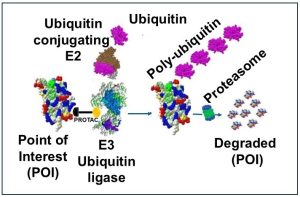
One of the first leading TPD approaches are PROteolysis TArgeting Chimeras (PROTACs). PROTACs are bifunctional small molecules that induce the selective degradation of disease-associated proteins by recruiting them to an E3 ubiquitin ligase. This interaction promotes ubiquitination of the target protein, leading to its recognition and destruction by the ubiquitin–proteasome system. Unlike conventional inhibitors that temporarily block protein activity, PROTACs eliminate the target protein itself, resulting in more complete and sustained suppression of its biological function. Recently, a clinical level PROTAC, (Vepdegestrant) was the first in its class to be approved by the FDA for treating cancer.
Beyond PROTACs and molecular glues, the TPD landscape has recently expanded. Lysosome-targeting chimeras (LYTACs), autophagy-targeting chimeras (AUTACs and ATTECs), antibody-based degraders, RIBOTACs, and other emerging modalities are enabling the selective removal of membrane proteins, secreted proteins, RNA molecules, and intracellular targets that are inaccessible to conventional proteasome-dependent approaches. These advances are being supported by an expanding understanding of E3 ligase biology, the identification of novel degradation pathways, and the application of artificial intelligence and structure-guided design strategies that facilitate degrader optimization and target selection.
As a result, TPD has attracted significant attention across oncology, immunology, neuroscience, and inflammatory disease research, where many therapeutically relevant proteins have historically been considered difficult or impossible to drug.
RECENT ADVANCES IN PROTACS, MOLECULAR GLUE DEGRADERS AND LYTACS
The First FDA Approval of a PROTAC Drug.
Vepdegestrant (VEPPANU™) represents a landmark achievement in drug discovery as the first PROTAC therapy ever approved by the U.S. FDA for the treatment of adults with estrogen receptor (ER)-positive, HER2-negative, ESR1-mutated advanced or metastatic breast cancer. Unlike conventional inhibitors that merely block protein function, vepdegestrant is a heterobifunctional small molecule designed to induce targeted protein degradation. One end of the molecule binds the estrogen receptor (ERα), while the other recruits an E3 ubiquitin ligase bringing the two proteins into close proximity. This interaction triggers polyubiquitination of ERα, marking it for destruction by the cellular 26S proteasome. The resulting depletion of ER protein leads to cell-cycle arrest and ultimately cancer cell death or growth inhibition in ER-dependent tumors. Clinically, vepdegestrant is administered orally, providing a significant convenience advantage over injectable endocrine therapies. Among patients harboring ESR1 mutations, vepdegestrant demonstrated a statistically significant improvement in progression-free survival (PFS), establishing proof that targeted protein degradation can generate meaningful clinical benefit in patients with endocrine-resistant breast cancer. The approval of vepdegestrant therefore represents not only a new therapeutic option for patients with ESR1-mutated disease but also a major validation of the broader targeted protein degradation field, opening the door for future PROTAC-based therapies against previously difficult-to-drug oncogenic targets.
Expansion of Molecular Glue Degraders
Recent advances in molecular glue degraders (MGDs) have transformed targeted protein degradation into a rapidly expanding drug discovery platform capable of addressing previously “undruggable” proteins. Molecular glues are small molecules that induce or stabilize interactions between an E3 ubiquitin ligase and a target protein, resulting in polyubiquitination and subsequent degradation of the target by the ubiquitin-proteasome system. Unlike PROTACs, which contain separate ligands connected by a linker, molecular glues function as monovalent compounds that remodel protein-protein interaction surfaces to create novel ternary complexes.
At the cellular level, degradation of disease-driving proteins leads to sustained suppression of signaling pathways, transcriptional programs, and oncogenic networks that are often inaccessible to conventional inhibitors. Clinically, molecular glue degraders are being developed for hematologic malignancies, solid tumors, autoimmune disorders, and neurodegenerative diseases. More recently, advances have dramatically accelerated the discovery of new molecular glues. High-throughput phenotypic screening, covalent fragment screening, proximity labeling technologies, and quantitative proteomics have further expanded the repertoire of degradable proteins, revealing opportunities to target transcription factors, RNA-binding proteins, scaffolding proteins, and regulatory proteins that lack conventional enzymatic active sites.
These technological advances have led to the identification of molecular glues capable of degrading oncogenic transcription factors, and other lineage-specific regulatory proteins, opening new therapeutic strategies for cancers driven by aberrant transcriptional programs. Collectively, the convergence of structural biology, computational modeling, and advanced screening technologies has positioned molecular glue degraders as one of the most promising next-generation therapeutic modalities, with the potential to selectively eliminate disease-causing proteins that were previously considered beyond the reach of traditional small-molecule drug discovery.
Progress in Extracellular and Membrane Protein Degradation (LYTACs)
Recent advances in lysosome-targeting chimeras (LYTACs) have expanded the scope of targeted protein degradation beyond the intracellular proteome, creating a new therapeutic modality capable of eliminating extracellular, membrane-bound, and secreted disease-associated proteins. LYTACs are bifunctional molecules composed of a target-binding moiety (typically an antibody, peptide, or small molecule ligand) linked to a lysosome-shuttling ligand that engages endogenous cell-surface lysosomal trafficking receptors. Upon binding both the target protein and the trafficking receptor, the LYTAC induces receptor-mediated endocytosis, directing the target-receptor complex through the endosomal pathway and ultimately to lysosomes where proteolytic degradation occurs.
Unlike ubiquitin-proteasome–based degraders, which require intracellular target engagement and ubiquitination, LYTACs exploit natural lysosomal trafficking mechanisms, enabling degradation of extracellular cytokines, soluble pathogenic proteins, membrane receptors, and immune regulatory molecules.
The therapeutic potential of LYTACs spans oncology, immunology, fibrosis, neurodegenerative disease, and metabolic disorders. Recent advances in structure-based protein engineering, cryo-electron microscopy, computational modeling, AI-assisted binder optimization, and high-throughput screening technologies have significantly accelerated LYTAC discovery. Collectively, these innovations are transforming targeted protein degradation from an intracellular technology into a comprehensive platform capable of selectively removing disease-causing proteins across the entire cellular microenvironment.
TABLE 1. Comparison of three major TPD modalities
| Feature | PROTACs | Molecular Glue Degraders | LYTACs |
| Primary Mechanism | Heterobifunctional molecules that recruit an E3 ubiquitin ligase to a target protein, leading to ubiquitination and proteasomal degradation. | Small molecules that induce or stabilize interactions between a target protein and an E3 ligase, resulting in ubiquitination and degradation. | Bifunctional molecules that bind a target protein and a lysosome-trafficking receptor, directing the target to lysosomal degradation. |
| Degradation Pathway | Ubiquitin–proteasome system (UPS). | Ubiquitin–proteasome system (UPS). | Endosome–lysosome pathway. |
| Target Location | Intracellular proteins. | Intracellular proteins. | Extracellular, membrane and secreted proteins. |
| Target Binding Mode | Direct binding through a dedicated target ligand. | Often indirect; glue stabilizes a protein-protein interaction. | Antibody, peptide, or ligand linked to lysosomal receptor binder. |
| Typical Molecular Structure | Bifunctional molecule consisting of target ligand, linker, and E3 ligase ligand. | Monovalent small molecule. | Bifunctional :target-binding and lysosomal receptor ligand binding |
| Catalytic Mode of Action | Yes. One molecule can degrade multiple target proteins. | Yes. Small amounts can induce degradation repeatedly. | Potentially catalytic. |
| Molecular Weight | 700–1,500 Da. | 200–600 Da. | Often 5–150 kDa |
| Targets Membrane Receptors | Limited to intracellular receptor domains. | Limited. | Excellent. |
| TargetsSecreted Proteins | No. | No. | Yes. |
| Targets RTKs (EGFR, HER2) | Yes, intracellular kinase domain. | Possible but less common. | Yes, entire receptor can be degraded from the cell surface. |
| May Overcome Resistance | High; eliminates protein | High; induces degradation of inaccessible proteins. | High; removes entire protein regardless of signaling state. |
| Clinical Development Maturity (2026) | Most advanced targeted degrader modality. First FDA-approved PROTAC: Vepdegestrant. | Several clinical-stage compounds; multiple late-stage programs. | Primarily preclinical and early clinical development. |
| Major Advantages | Broad intracellular target coverage, catalytic degradation, can overcome resistance mutations. | Small size, oral bioavailability, access to undruggable proteins, simple chemistry. | Degradation of extracellular proteins, secreted factors, and receptors |
| Major Limitations | Large size can limit oral bioavailability and tissue penetration. | Productive ternary complexes are difficult to predict. | Large biologic-like, complex manufacturing, receptor-specific tissue distribution. |
In summary, PROTACs, MGD and LYTACs have unique features, advantages and disadvantages.
- PROTACs: Degrade intracellular enzymes, signaling proteins, kinases, and transcriptional regulators.
- Molecular Glues: Target previously undruggable intracellular proteins, especially transcription factors and regulatory proteins through induced protein-protein interactions.
- LYTACs: Eliminate extracellular proteins, cytokines, immune checkpoints, receptor tyrosine kinases, and secreted disease mediators that cannot be accessed by proteasome-dependent degraders.
PROTACs, molecular glues, and LYTACs form a complementary degradation toolkit capable of targeting disease-causing proteins throughout the intracellular, membrane-associated, and extracellular proteome, substantially expanding the range of therapeutically actionable targets.
NEXT-GENERATION TARGETED DEGRADATION PLATFORMS
Several next-generation targeted degradation platforms have emerged in the last few years that expand the concept of induced proximity beyond PROTACs, molecular glues, and LYTACs. The four most promising approaches are summarized below. All remain in preclinical development but have demonstrated proof-of-concept in cellular and animal models.
TABLE 2. Comparison of Next-Generation Targeted Degradation Platforms
| Technology | Cellular Degradation Pathway | Molecular Mechanism | Key Target Classes | Major Advantage |
| AUTACs (Autophagy-Targeting Chimeras) | Selective autophagy | Bifunctional molecules. Induces autophagy and lysosomal degradation. | Intracellular proteins, protein aggregates, damaged mitochondria | Can degrade large complexes |
| ATTECs (Autophagosome-Tethering Compounds) | Selective autophagy | Small molecules tethering the target to autophagy for lysosomal destruction. | Protein aggregates, mutant huntingtin, α-synuclein, tau | Does not require ubiquitination or E3 ligases. |
| DUBTACs (Deubiquitinase-Targeting Chimeras) | Ubiquitin-proteasome system | DUBTACs recruit deubiquitinase to remove ubiquitin from a target protein, rescuing degradation increasing protein abundance. | Tumor suppressors, CFTR, haploinsufficient proteins | First proximity technology for protein stabilization. |
| RIBOTACs (Ribonuclease-Targeting Chimeras) | RNase-mediated RNA degradation | Small molecules recruit endogenous RNase L to disease-associated RNAs, leading to selective RNA cleavage before protein translation occurs. | Viral RNAs, oncogenic RNAs, repeat-expansion transcripts | Targets disease-causing RNA directly, including non-coding RNAs that cannot be addressed by protein degraders. |
AUTACs (Autophagy-Targeting Chimeras)
AUTACs exploit the cell’s selective autophagy pathway rather than the proteasome. A degradation tag resembling a cellular stress signal is linked to a ligand for the target protein. This induces ubiquitination and recruitment of autophagy receptors, resulting in encapsulation within autophagosomes and delivery to lysosomes. Unlike PROTACs, AUTACs can remove large protein complexes, protein aggregates, and even dysfunctional mitochondria (mitophagy). This makes them particularly attractive for neurodegenerative diseases and mitochondrial disorders.
ATTECs (Autophagosome-Tethering Compounds)
ATTECs represent a more direct autophagy-based strategy. These small molecules simultaneously bind a target protein and a structural component of autophagosomes. By physically tethering the target to forming autophagosomes, ATTECs bypass the need for ubiquitination and E3 ligases. The most advanced studies have focused on degradation of mutant huntingtin protein in Huntington’s disease models, where substantial reductions in aggregate burden and disease phenotypes have been demonstrated in vivo.

DUBTACs (Deubiquitinase-Targeting Chimeras)
DUBTACs are conceptually the inverse of degraders. Instead of recruiting an E3 ligase, they recruit a deubiquitinase (DUB), to remove ubiquitin chains from a target protein. This prevents proteasomal destruction and increases protein stability. Initial proof-of-concept studies restored levels of mutant CFTR protein associated with cystic fibrosis. The approach has generated considerable interest for diseases caused by loss-of-function mutations or insufficient protein expression, where increasing protein abundance may be therapeutically beneficial.
RIBOTACs (Ribonuclease-Targeting Chimeras)
RIBOTACs extend induced proximity technology from proteins to RNA. These molecules contain an RNA-binding component connected to a recruiter of endogenous RNase L. Once assembled on the target transcript, RNase L selectively cleaves the RNA, preventing protein synthesis. This approach has shown activity against viral genomes, oncogenic RNAs, microRNAs, and toxic repeat-expansion transcripts associated with neurodegenerative disorders. Because many disease-driving RNAs encode proteins considered “undruggable,” RIBOTACs offer a completely new route to therapeutic intervention.
TABLE 3. Relative Position in the TPD Landscape
| Platform | Protein Degradation | RNA Degradation | Extracellular Targets | Large Aggregates/Organelles |
| AUTACs | ✓ | ✗ | ✗ | ✓ |
| ATTECs | ✓ | ✗ | ✗ | ✓ |
| DUBTACs | Stabilization (not degradation) | ✗ | ✗ | ✗ |
| RIBOTACs | Indirect | ✓ | ✗ | ✗ |
Among these emerging modalities, AUTACs and ATTECs are particularly promising for neurodegenerative diseases characterized by insoluble protein aggregates, while RIBOTACs open access to disease-driving RNAs and DUBTACs provide a complementary strategy for restoring beneficial proteins. Together, these technologies are broadening targeted degradation from a proteasome-centered field into a comprehensive induced-proximity therapeutic platform capable of modulating proteins, organelles, and RNA throughout the cell.
CONCLUSION
Targeted protein degradation has rapidly evolved from a promising concept into a transformative therapeutic modality that is reshaping modern drug discovery. Recent advances in PROTACs, molecular glue degraders, and lysosome-targeting chimeras (LYTACs) have significantly expanded the scope of degradable targets, enabling the elimination of disease-driving proteins that were previously considered undruggable. The landmark FDA approval of the first PROTAC drug, vepdegestrant, represents a major validation of the degradation paradigm and establishes a regulatory pathway for future degrader therapeutics. Concurrently, advances in structure-guided design, chemoproteomics, artificial intelligence, and high-throughput screening have accelerated the discovery of next-generation molecular glues capable of selectively degrading diverse intracellular targets, including transcription factors and regulatory proteins. Progress in LYTAC technologies has further extended targeted degradation beyond the cell interior, providing new opportunities to eliminate extracellular and membrane-associated proteins implicated in cancer, autoimmune diseases, and other disorders. Beyond these established platforms, emerging technologies such as AUTACs, ATTECs, DUBTACs, RIBOTACs, and other novel degradation strategies continue to broaden the mechanistic toolkit available to drug developers. Collectively, these innovations are redefining therapeutic intervention by shifting the focus from protein inhibition to selective protein elimination, creating unprecedented opportunities to address previously inaccessible disease mechanisms. As degrader technologies continue to mature, improvements in target scope, tissue selectivity, pharmacokinetics, and clinical efficacy are expected to establish targeted protein degradation as a foundational pillar of next-generation precision medicine.
REFERENCES
- Tsai JM, Nowak RP, Ebert BL, Fischer ES.
Targeted protein degradation: from mechanisms to clinic.
Nature Reviews Molecular Cell Biology. 2024;25:740–757.
https://doi.org/10.1038/s41580-024-00729-9
- Zhong G, Chang X, Xie W, Zhou X.
Targeted protein degradation: advances in drug discovery and clinical practice.
Signal Transduction and Targeted Therapy. 2024;9:308.
https://doi.org/10.1038/s41392-024-02004-x
- Hinterndorfer M, Spiteri VA, Ciulli A, Winter GE.
Targeted protein degradation for cancer therapy.
Nature Reviews Cancer. 2025;25:493–516.
https://doi.org/10.1038/s41568-025-00817-8 - Pliatsika D, Blatter C, Riedl R.
Targeted protein degradation: current molecular targets, localization, and strategies.
Drug Discovery Today. 2024;29(11):104178.
https://doi.org/10.1016/j.drudis.2024.104178
Disclaimer: This blog post is intended solely for educational and scientific informational purposes. Any mention of therapeutic drug names, including FDA-approved medications, is for the purpose of accurate reporting and discussion of biomedical research and does not constitute medical advice, endorsement, or promotion. Readers should not interpret the content as a recommendation for any specific treatment. Always consult a qualified healthcare professional for medical advice or treatment decisions.
About Marin Biologic Laboratories
Our Recent Publication/Meeting Presentation on Gene Therapy
1. Development of VNX-101, an Adeno-Associated Virus with Less Immunogenicity and Efficient Long-Term Expression of a CD19 T-Cell Engager. Molecular Therapy Methods & Clinical Development, published online July 24, 2025.
2. Cell-Based Potency Assay for Anti-CD3-Anti-CD19 Diabody. Journal of Immunological Methods. 2025. 545-114004.
3. Development of a Pharmacokinetic (PK) Mouse Serum GLP ELISA for an Anti–CD19–AntiCD3 Diabody
4. American Society of Hematology (ASH) Annual Meeting 2024.
Abstract link: Using Gene Therapy to Solve Challenges with CAR-T Cell Immunotherapy: Lead Selection and Preclinical Development of an Adeno-Associated Virus with Reduced Immunogenicity Exhibiting Efficient and Long-Term Expression of an Anti-CD19 T-Cell Engager.
Comprehensive Assay Solutions for In Vitro and Cell Based Potency Assays and Pharmacokinetics Studies- Our Expertise
With 30 years of expertise in cell culture, cell-based assays, and preclinical/clinical PK/PD analysis, we specialize in offering assay services essential for a wide variety of therapeutic drug development programs, preclinical studies, IND/BLA applications, and commercialization. Our comprehensive services include both preclinical non-GLP and GLP assays, as well as non-GMP and GMP assays, providing critical support throughout the entire development pipeline.
Watch the following video and explore our latest presentation on the development and validation of potency and pharmacokinetic (PK) assays for AAV vectors, highlighting innovative methodologies and industry-leading expertise.
Download the full presentation: Development of Custom Cell Based and In vitro Potency and Pharmacokinetics (PK) Assays for AAV vectors- Marin biologic Laboratories
Development of Cell-Based Potency Assays: Case Studies and Blogs from Marin Biologic Laboratories (MarinBio)




Drug Discovery & Development Assays Offered by Marin Biologic Laboratories (MarinBio)
- ADME/Tox
- Molecular Biology
- The Art of Cell Culture
- Exosomes
- Stability Services
- Potency Assay
- Gene Therapy Assays
- Immunotherapy Assays
- Antiviral Therapy Assays
- cGMP
- MLR
- Cell Based Assays
- ELISA
- Flow Cytometry
- Protein
- PCR-qPCR
- Immunoassay
- Radioimmunoassay
- GLP
- Transfection
- Cell Therapy Assays
- Targeted Protein Degradation
- Research to Commercialization
